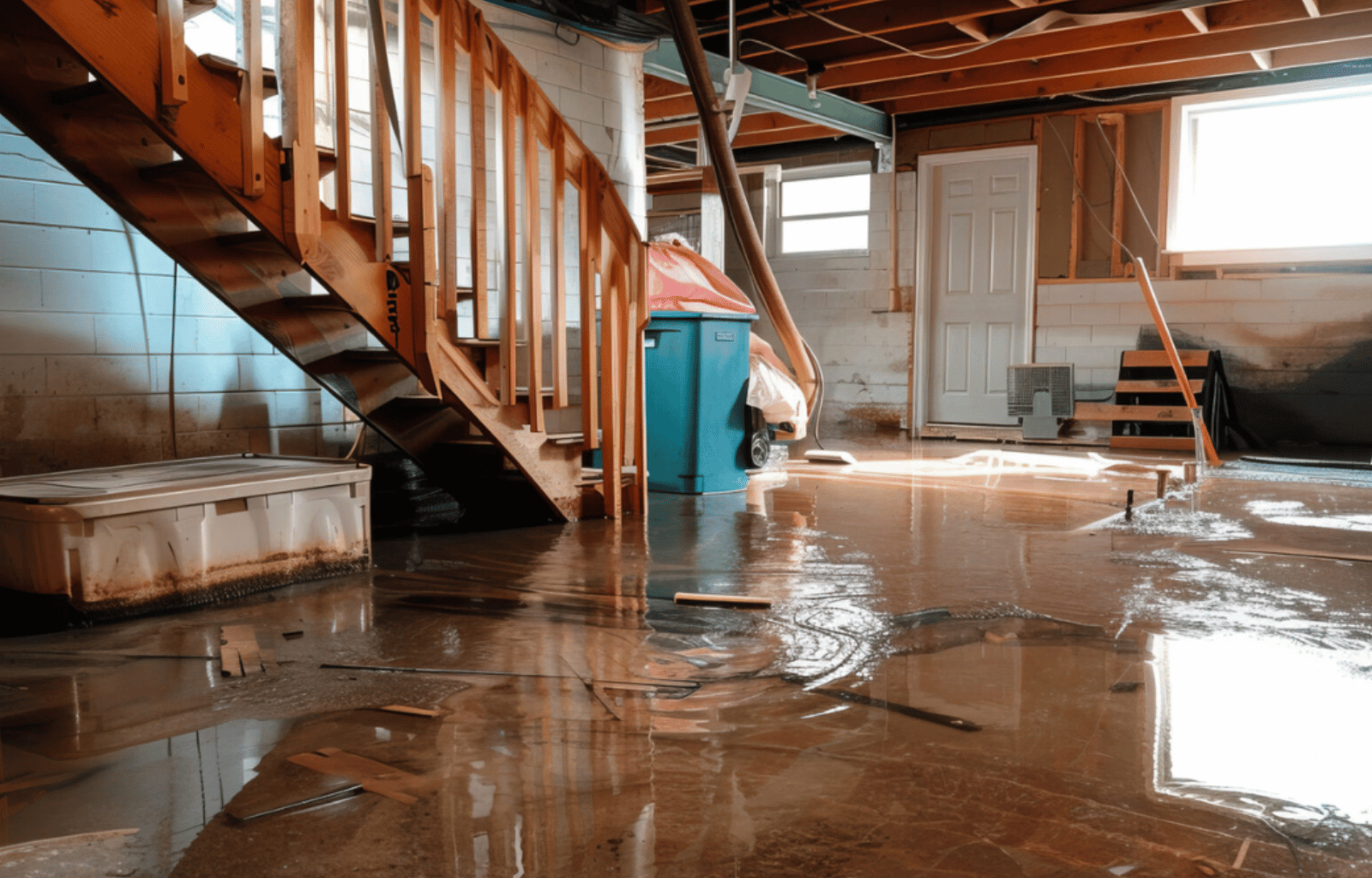


Water Damage Restoration Projects That Require Structural Engineering
When water damages a building, the restoration industry moves quickly. Crews arrive with industrial dehumidifiers and air movers, moisture maps are produced, damaged drywall is cut out, and the process of drying, cleaning, and rebuilding begins. Restoration companies are skilled at what they do — returning a building to its pre-loss appearance efficiently and in coordination with insurance timelines. For a large proportion of water damage events, that's exactly what's needed.
But restoration and structural engineering are different disciplines with different scopes, and they aren't interchangeable. Restoration focuses on returning a building to its pre-loss condition. Structural engineering focuses on ensuring the building's load-carrying systems are adequate and safe. On many water damage projects, these two scopes overlap — and when they do, treating the restoration as a purely cosmetic exercise produces buildings that look restored but aren't structurally sound.
The challenge is that the line between restoration work and structural work isn't always obvious. It's not drawn at project size or dollar value — a relatively modest restoration project can have significant structural implications, while a large-scale rebuild may be entirely cosmetic if the structural systems came through unaffected. The line is drawn at the structural systems themselves: when water damage has affected load-bearing elements, connections, or the building's ability to resist lateral forces, structural engineering must be part of the restoration.
This guide identifies the specific water damage restoration scenarios that require structural engineering involvement, explains what structural engineers contribute in each case, and helps homeowners and project managers understand why skipping that involvement creates problems that outlast the restoration itself.
Why Restoration Projects Miss Structural Issues
Before getting into specific scenarios, it's worth understanding why structural problems are regularly missed or underweighted in water damage restoration projects. The reasons are systemic, not a matter of individual negligence.
Restoration contractors work within their discipline. Water damage restoration professionals are trained and certified in moisture remediation, mould prevention, content cleaning, and finish reconstruction. They are not structural engineers, and they don't claim to be. When they probe a wall and find soft drywall, they remove and replace the drywall. When they pull up wet flooring and find damaged subfloor, they replace the subfloor. What they typically don't do — and aren't trained or licensed to do — is assess whether the framing behind the drywall or beneath the subfloor has lost structural capacity and what that means for the floor or wall system's ability to carry design loads.
Insurance timelines create pressure. Insurance-driven restoration projects operate under time pressure. The goal is to return the property to its pre-loss condition as quickly as possible, minimizing the insurer's cost for temporary accommodation and maximizing claim settlement efficiency. This pressure is not malicious, but it does create incentives to move quickly through assessment and into reconstruction — which can mean structural questions get less attention than they deserve.
Water damage often hides its structural consequences. As discussed throughout this series, the visible signs of water damage — staining, warping of finishes, swelling of wood — don't reliably indicate the degree of structural damage. A floor that appears to have sustained only superficial water damage may have framing that has been wet long enough to initiate decay that will progress for years after the restoration is complete. A wall that looks fine once the drywall is replaced may have sheathing and studs that have lost shear capacity. Visible restoration can be complete while structural damage is incomplete.
Structural engineering isn't automatically part of the restoration scope. Unless a structural engineer is specifically engaged — either by the homeowner, the contractor, or the insurer — they're not present. There's no automatic trigger that brings structural expertise into a restoration project. The homeowner must know to ask, or someone in the project chain must recognize and flag the need.
Scenario 1: Restoration After Major Flooding
When a home or building experiences significant flooding — from groundwater, surface water, storm surge, or sewer backup reaching above floor level — the restoration is rarely purely cosmetic. Flood events that inundate floor systems and wall assemblies expose structural elements to sustained immersion, which is among the most damaging conditions wood-framed structures can experience.
Floor system assessment and repair. Subfloor sheathing that has been submerged swells, delaminates, and loses shear strength. The joists beneath may have absorbed moisture into their cores. After a flood, the question isn't just whether the subfloor needs replacing — it's whether the joists have been compromised. In a post-flood restoration, the structural engineer assesses the floor framing, determines which members are adequately sound for sistering and which require full replacement, and specifies the repair. The restoration contractor executes that repair as part of the overall reconstruction.
Engineered wood I-joists deserve particular attention in flood restoration. The OSB webs of I-joists are highly sensitive to moisture — they swell, and the adhesive bonds that hold the web to the flanges can fail under prolonged saturation. A post-flood I-joist that appears to have dried and stabilized may have compromised web-to-flange connections that will fail under load. Any I-joist floor system that was submerged should be assessed by a structural engineer before the floor is rebuilt above it.
Wall framing and sheathing. Wall framing that has been submerged to significant height needs to be assessed before new drywall is installed. The engineer evaluates stud condition, bottom plate condition (the most vulnerable element, as it sits directly on the wet floor), and sheathing condition in shear-critical wall locations. Bottom plates in flood-affected walls are almost always compromised — they absorb water from the floor below, and being at the base of the wall assembly, they often remain wet long after the flood has receded and the rest of the building has dried.
Foundation-to-frame connections. Flooding that reaches the rim joist level exposes anchor bolts, sill plates, and structural connectors to immersion. The structural engineer assesses the condition of these connections — particularly for corrosion of metal hardware and decay of sill plate lumber — because their adequacy determines whether the structure above is properly anchored to the foundation below.
The insurance claim dimension. For flood events subject to insurance claims, a structural engineer's documented assessment of structural damage is significantly more defensible than a restoration contractor's estimate of repair scope. When claims are disputed — when the insurer questions whether structural framing repairs were necessary — engineering documentation provides the basis for the homeowner's position. Engaging a structural engineer early in a flood restoration isn't just about building safety; it's about claim integrity.
Scenario 2: Restoration After Roof Leaks and Envelope Failures
Roof leaks and building envelope failures — failed flashing, deteriorated window seals, missing kick-out flashing, failed caulking at penetrations — are the most common cause of chronic water damage in residential buildings. The restoration after a significant or long-running roof leak often involves structural engineering, even when the leak itself seems minor.
Duration is the critical variable. A roof leak that was discovered and repaired within days is unlikely to have caused significant structural damage in most cases. A roof leak that went undetected for months or years is a different matter entirely. The restoration after a chronic leak isn't a repair of the finished surfaces — it's an investigation of what the prolonged moisture exposure has done to the roof structure, wall framing, and any other structural elements in the leak's path.
Roof structure assessment. The structural engineer accesses the attic or roof cavity and assesses rafter or truss condition in the vicinity of the leak. Rafters near valleys, at penetrations, and along eave lines where water concentrates are the most vulnerable. Rafter ends where they bear on the wall plate are particularly important — rot that begins at the rafter end can progress inward along the grain before it's visible on the surface, and a rafter with a rotted bearing end may have almost no effective support.
Roof trusses have their own concerns. Truss plates — the galvanized metal connector plates pressed into the wood at each truss joint — can corrode when subject to prolonged moisture, and corroded truss plates lose their load transfer capacity. A truss with corroded connector plates may appear visually intact while having inadequate joint capacity. Where chronic leak damage is suspected in a trussed roof, the engineer specifically examines truss connector plate condition.
Ceiling and floor structural elements. When a leak travels down through the ceiling plane and into the floor assembly above — as happens with multi-storey buildings or homes with habitable space above the leaking area — the structural implications extend beyond the roof. The engineer traces the water path and assesses structural elements along it.
Mould remediation sequencing. Chronic envelope leaks that have produced significant mould growth in structural cavities require mould remediation before restoration proceeds. Structural engineering assessment should occur as part of the mould remediation process — the engineer assesses structural condition while the cavities are open and accessible, before new finishes close them back up.
Scenario 3: Restoration After Plumbing Failures
Burst pipes, failed supply lines, overflowing appliances, and plumbing connection failures deliver large volumes of water rapidly and can affect multiple floors of a building. The structural implications of plumbing failures depend heavily on how quickly the failure was discovered and addressed, and how the water traveled through the building.
Long-duration undetected failures. A supply line that fails in an unoccupied vacation property, or a slow leak behind a finished wall that goes undetected for months, can cause structural damage equivalent to a chronic roof leak — concentrated moisture exposure over an extended period in a poorly ventilated location. These situations require structural engineering as part of the restoration assessment.
Failures affecting floor assemblies in multi-storey buildings. When water from a plumbing failure travels through a floor assembly from one storey to the next, it saturates the floor framing — joists, blocking, rim joists — as it passes through. Even if the failure was short-lived, significant volumes of water in a floor assembly can saturate framing to a degree that creates structural concerns if it doesn't dry quickly. Restoration contractors monitor moisture content during drying; if framing moisture content isn't returning to acceptable levels within expected timeframes, the structural engineer should be engaged to assess whether members have been compromised.
Failures in engineered wood floor systems. As noted above, engineered I-joists are particularly vulnerable to moisture damage. Plumbing failures in homes with I-joist floor systems should trigger structural assessment of the affected floor area regardless of the apparent duration of the failure, because delamination damage in I-joist webs may not be visible during restoration drying.
Concrete slab failures. In buildings with post-tensioned concrete slabs — common in areas with expansive clay soils — plumbing failures beneath the slab can be particularly damaging. The combination of saturated soil and the structural sensitivity of post-tensioned systems means that any significant plumbing event below a post-tensioned slab should include structural engineering review.
Scenario 4: Restoration Involving Structural Member Replacement
Any restoration scope that includes replacing structural members — floor joists, roof rafters, wall studs, beams, columns, or rim joists — is structural engineering work whether or not an engineer has been engaged. The structural engineer should be the one specifying the replacement members: their size, species and grade, connections, and any supplemental elements needed to restore the original load-carrying capacity.
Matching original intent isn't always matching original dimensions. Replacing a damaged 2x10 joist with another 2x10 joist is straightforward when the original was adequate. But if the original design was marginal for the current use of the space — as is common in older homes where loads have increased — replacing like-for-like perpetuates the deficiency. The engineer determines whether the replacement member should match the original or be upgraded to meet current requirements.
Sistering vs. full replacement. The decision to sister a damaged member (adding a new member alongside and fastening it to the damaged one) versus fully replacing it is a structural judgment. Sistering is effective when the damaged member provides partial support and the combined capacity of the damaged-plus-sister is adequate. It may be inadequate if the damaged member has lost so much capacity that even a sistered repair doesn't achieve required strength and stiffness. The engineer makes this determination based on the assessed residual capacity of the damaged member.
Connection restoration. When structural members are replaced, the connections at their ends must also be addressed. A new joist properly supported at mid-span but inadequately connected at its bearing points is structurally inadequate regardless of the joist's own capacity. The engineer specifies connection details — joist hangers, blocking, fastener types and quantities — as part of the structural repair scope.
Permit and inspection requirements. Structural member replacement in a permitted restoration project requires building department inspection of the new framing before it is closed in. In many jurisdictions, this requires engineering drawings specifying the repair. Restoration contractors who close in structural repairs without the required inspections create problems that emerge at sale — when the permit history is reviewed and unpermitted structural work is discovered.
Scenario 5: Restoration in Buildings with Pre-Existing Structural Deficiencies
Water damage restoration exposes the inside of walls, floors, and ceilings that are rarely opened under any other circumstances. What's revealed is sometimes worse than the water damage itself: framing that doesn't meet code, connections that were never properly made, beams that were cut for service runs without regard for structural capacity, or evidence that a previous renovation removed a load-bearing wall without the header it required.
When a restoration project reveals pre-existing structural deficiencies, those deficiencies don't disappear because they predate the water event. The restoration creates an opportunity — and in most jurisdictions, an obligation under the building code — to address conditions that are discovered during permitted work. The structural engineer documents what was found, determines what must be remediated to meet current standards, and produces the drawings required for the remediation permit.
This is sometimes a difficult conversation with insurance adjusters, who may initially resist covering structural repairs that predate the water event. But from a building safety perspective, restoring a building to its pre-loss condition is not adequate when its pre-loss condition was structurally deficient. Engineering documentation of the discovered conditions is the basis for navigating these conversations effectively.
Scenario 6: Restoration That Involves Changes to the Building
Some water damage restoration projects are combined with renovation — the homeowner takes the opportunity of an opened-up building to make changes they've been wanting: removing a wall, adding a bathroom, upgrading a floor system. When restoration and renovation combine, structural engineering involvement becomes even more clearly necessary, because the scope now includes not just restoring what existed but designing what's new.
The structural engineer assesses the existing conditions revealed by the restoration, designs the new elements required by the renovation, and integrates both scopes into a coherent set of drawings. This integrated approach prevents the situation where a restoration contractor and a renovation contractor make independent decisions about adjacent structural conditions — decisions that may be individually plausible but collectively inconsistent.
What Structural Engineering Adds to a Restoration Project
Homeowners sometimes view structural engineering involvement in a restoration project as an added cost and delay. In practice, it is neither — it's a cost that prevents larger costs and a step that prevents larger delays.
It defines the repair scope correctly. Restoration scopes that don't include structural assessment regularly miss structural repairs that need to happen. When those repairs are discovered after the restoration is complete — during a sale inspection, during a renovation that opens the walls again, or when the inadequately repaired structure fails — the cost of addressing them is far higher than it would have been during the original restoration.
It produces documentation that protects homeowners. Engineering reports, permit drawings, and inspection records create a paper trail that demonstrates the restoration was done properly. This documentation is valuable at sale, valuable for insurance purposes, and valuable if any dispute arises about the quality of the restoration work.
It ensures repairs meet current code. Restoration contractors working without engineering oversight may replicate pre-existing conditions that don't meet current building code requirements. The structural engineer ensures that restoration work — particularly when structural members are replaced — meets current standards, not the standards of whenever the building was originally constructed.
It supports insurance claims. Engineering documentation of structural damage and required repairs is materially useful in insurance claims, particularly when the scope of structural damage is disputed. Adjusters and their engineers respond to engineering documentation differently than they respond to contractor estimates.
How to Ensure Your Restoration Project Includes Structural Engineering When Needed
The burden of ensuring structural engineering is involved falls primarily on the homeowner, because neither the restoration contractor nor the insurance adjuster has an automatic obligation to engage engineering expertise. Homeowners can protect themselves by:
Asking the restoration contractor directly. Has structural damage been identified? If so, has a structural engineer been consulted? If not, why not? A reputable restoration contractor will be straightforward about the limits of their scope and will support engineering involvement when it's warranted.
Engaging a structural engineer independently. Homeowners are not required to use engineering services recommended by the restoration contractor or the insurer. Engaging an independent structural engineer whose assessment is not influenced by restoration scope or insurance settlement dynamics provides the most objective evaluation of structural conditions.
Including engineering in the insurance claim. Structural engineering fees incurred as part of a legitimate water damage claim are typically recoverable as part of the claim. Document engineering costs and include them in the claim submission.
Insisting on permits for structural repairs. If structural member replacement or other structural work is part of the restoration scope, a building permit is required. The permit process ensures that a building official reviews and inspects the structural work — an independent check that the work meets code.
Final Thoughts
Water damage restoration is a defined industry with established methods and certifications. Structural engineering is a separate licensed profession with different training, different tools, and different legal accountability. On many water damage restoration projects, both are needed — and the restoration is not complete until both scopes have been addressed.
The structural scope in a restoration project isn't an optional upgrade. It's the part of the project that determines whether the rebuilt building is actually safe, whether it will perform adequately over time, and whether the investment in restoration produced a result that will last. Treating it as secondary to the cosmetic restoration — something to add if there's budget and time left over — gets the priorities exactly backwards.
If your restoration project involves any of the scenarios described in this guide, engage a structural engineer as early in the process as possible. Early involvement shapes the scope correctly, prevents decisions that would need to be undone, and ensures that the restored building is structurally what it appears to be.
Managing a water damage restoration and unsure whether structural engineering should be part of the scope? A licensed structural engineer can review the damage and give you a clear answer — before the walls close back up.
Easy steps to create a color palette
Lorem ipsum dolor sit amet, consectetur adipiscing elit lobortis arcu enim urna adipiscing praesent velit viverra sit semper lorem eu cursus vel hendrerit elementum morbi curabitur etiam nibh justo, lorem aliquet donec sed sit mi dignissim at ante massa mattis.
- Neque sodales ut etiam sit amet nisl purus non tellus orci ac auctor
- Adipiscing elit ut aliquam purus sit amet viverra suspendisse potent
- Mauris commodo quis imperdiet massa tincidunt nunc pulvinar
- Excepteur sint occaecat cupidatat non proident sunt in culpa qui officia
What is a color palette?
Vitae congue eu consequat ac felis placerat vestibulum lectus mauris ultrices cursus sit amet dictum sit amet justo donec enim diam porttitor lacus luctus accumsan tortor posuere praesent tristique magna sit amet purus gravida quis blandit turpis.

Don’t overspend on growth marketing without good retention rates
At risus viverra adipiscing at in tellus integer feugiat nisl pretium fusce id velit ut tortor sagittis orci a scelerisque purus semper eget at lectus urna duis convallis porta nibh venenatis cras sed felis eget neque laoreet suspendisse interdum consectetur libero id faucibus nisl donec pretium vulputate sapien nec sagittis aliquam nunc lobortis mattis aliquam faucibus purus in.
- Neque sodales ut etiam sit amet nisl purus non tellus orci ac auctor
- Adipiscing elit ut aliquam purus sit amet viverra suspendisse potenti
- Mauris commodo quis imperdiet massa tincidunt nunc pulvinar
- Adipiscing elit ut aliquam purus sit amet viverra suspendisse potenti
What’s the ideal customer retention rate?
Nisi quis eleifend quam adipiscing vitae aliquet bibendum enim facilisis gravida neque euismod in pellentesque massa placerat volutpat lacus laoreet non curabitur gravida odio aenean sed adipiscing diam donec adipiscing tristique risus amet est placerat in egestas erat.
“Lorem ipsum dolor sit amet consectetur adipiscing elit, sed do eiusmod tempor incididunt ut labore et dolore magna aliqua enim ad minim veniam.”
Next steps to increase your customer retention
Eget lorem dolor sed viverra ipsum nunc aliquet bibendum felis donec et odio pellentesque diam volutpat commodo sed egestas aliquam sem fringilla ut morbi tincidunt augue interdum velit euismod eu tincidunt tortor aliquam nulla facilisi aenean sed adipiscing diam donec adipiscing ut lectus arcu bibendum at varius vel pharetra nibh venenatis cras sed felis eget.