

Direct Answer
Drying out a house after water damage in Mesa, AZ is a multi-step professional process. It starts with extracting all standing water, then removing unsalvageable wet materials, then deploying industrial air movers and dehumidifiers calibrated to the room's conditions. Technicians monitor moisture readings daily and adjust equipment until all structural materials reach target dry-standard levels — typically over 3–5 days. Household fans and consumer dehumidifiers cannot accomplish this at the necessary depth.
Key Takeaways
- Professional drying has three phases: extraction, equipment setup, and daily monitoring
- Industrial air movers and dehumidifiers are not interchangeable with household equipment
- Target moisture levels must be reached in ALL materials — not just surfaces
- Most residential drying takes 3–5 days under professional conditions
- Mesa's dry outdoor air helps, but cannot replace the controlled environment created by drying equipment
- Moisture readings are taken daily to confirm progress and adjust equipment placement
- "Dry to the touch" is not the standard — calibrated meters define completion
Table of Contents
- Step 1 — Extract All Standing Water
- Step 2 — Remove Unsalvageable Materials
- Step 3 — Set Up Drying Equipment
- Step 4 — Monitor Daily With Moisture Meters
- Step 5 — Verify Dry Standard and Remove Equipment
- Special Situations: Hardwood Floors, Slab, and Attic
- Why This Matters in Mesa, AZ
- What To Do Next
- When To Call a Professional
- FAQ
Step 1 — Extract All Standing Water
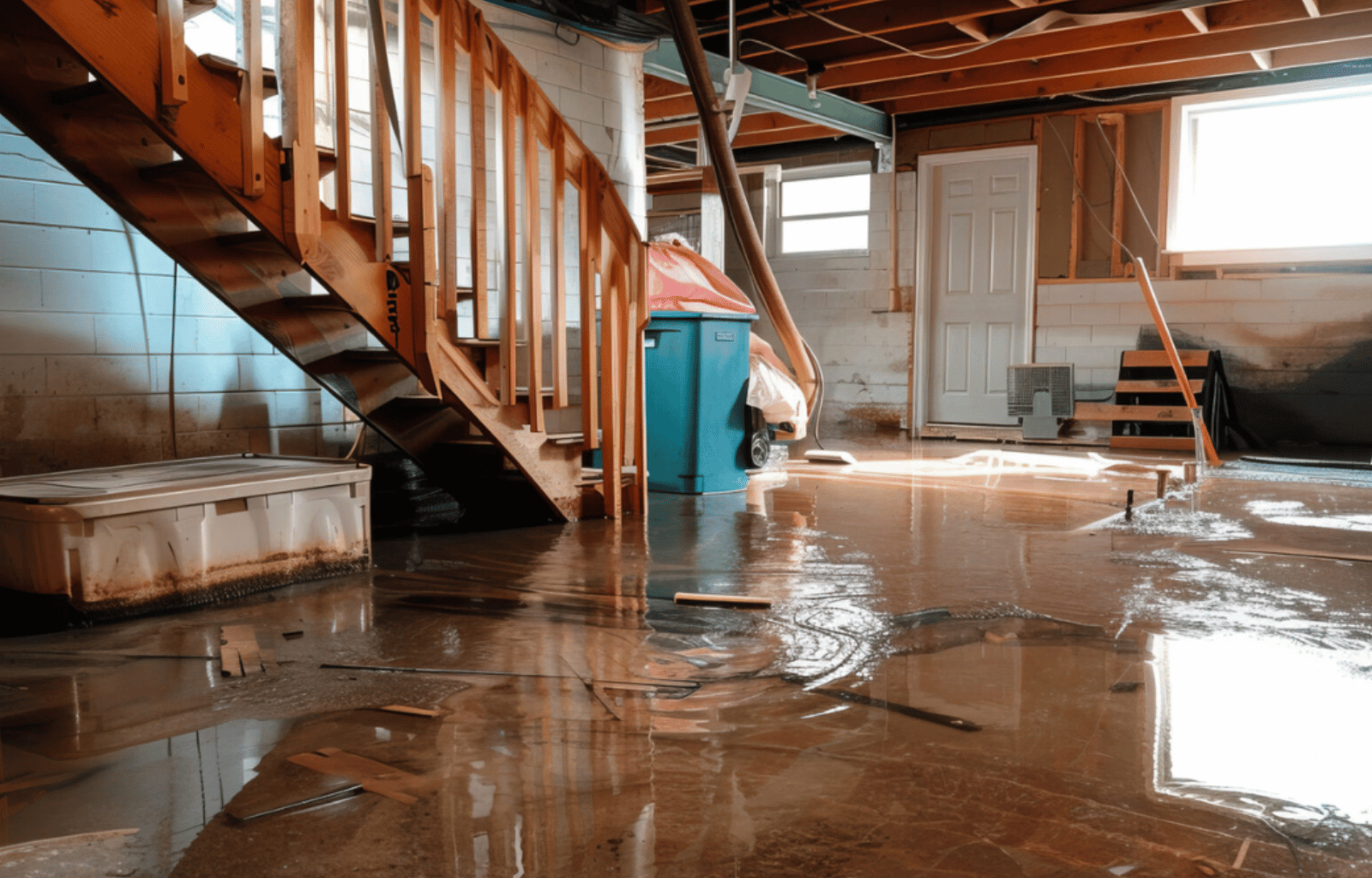
Before drying equipment can be effective, all standing water must be removed. Industrial water extraction equipment — truck-mounted or portable extraction units — removes standing water far more quickly and completely than wet-vacs or mops.
Even a thin film of water left on surfaces extends drying time significantly. Professional extraction targets every low point in the room, including under appliances, behind cabinets, and in floor drains.
Step 2 — Remove Unsalvageable Materials
Materials that cannot be dried — saturated carpet padding, wet insulation, drywall that has been wet above the flood cut line — are removed before drying equipment is placed. Leaving these materials in place creates moisture reservoirs that prevent the surrounding structure from drying effectively.
Flood cuts (removing a horizontal strip of drywall at the base of walls) open wall cavities to airflow, allowing the studs and interior sheathing to dry. This is standard procedure for walls that absorbed water above the baseboard level.
Step 3 — Set Up Drying Equipment
This is where professional drying diverges sharply from DIY attempts. The equipment used includes:
Industrial air movers: High-velocity fans designed to direct airflow in a specific pattern — typically positioned at a low angle along walls to create a vortex effect that draws moisture from surfaces and into the air. Multiple units are placed throughout the affected area.
Commercial dehumidifiers: Low-grain refrigerant dehumidifiers extract moisture from the air continuously. They are calibrated to the volume of the space and the quantity of moisture being evaporated by the air movers. Without dehumidifiers, air movers just move humid air without removing moisture.
Drying mats: For hardwood floors specifically, specialty drying mats are placed flat on the floor and connected to a vacuum system that draws moisture directly from within the wood — dramatically faster than air drying alone.
Containment: In some cases, plastic sheeting is used to isolate the drying zone, preventing moisture from the drying area from migrating to adjacent spaces.
Professional dehumidification and drying at the right scale makes the difference between saving materials and replacing them.
Step 4 — Monitor Daily With Moisture Meters
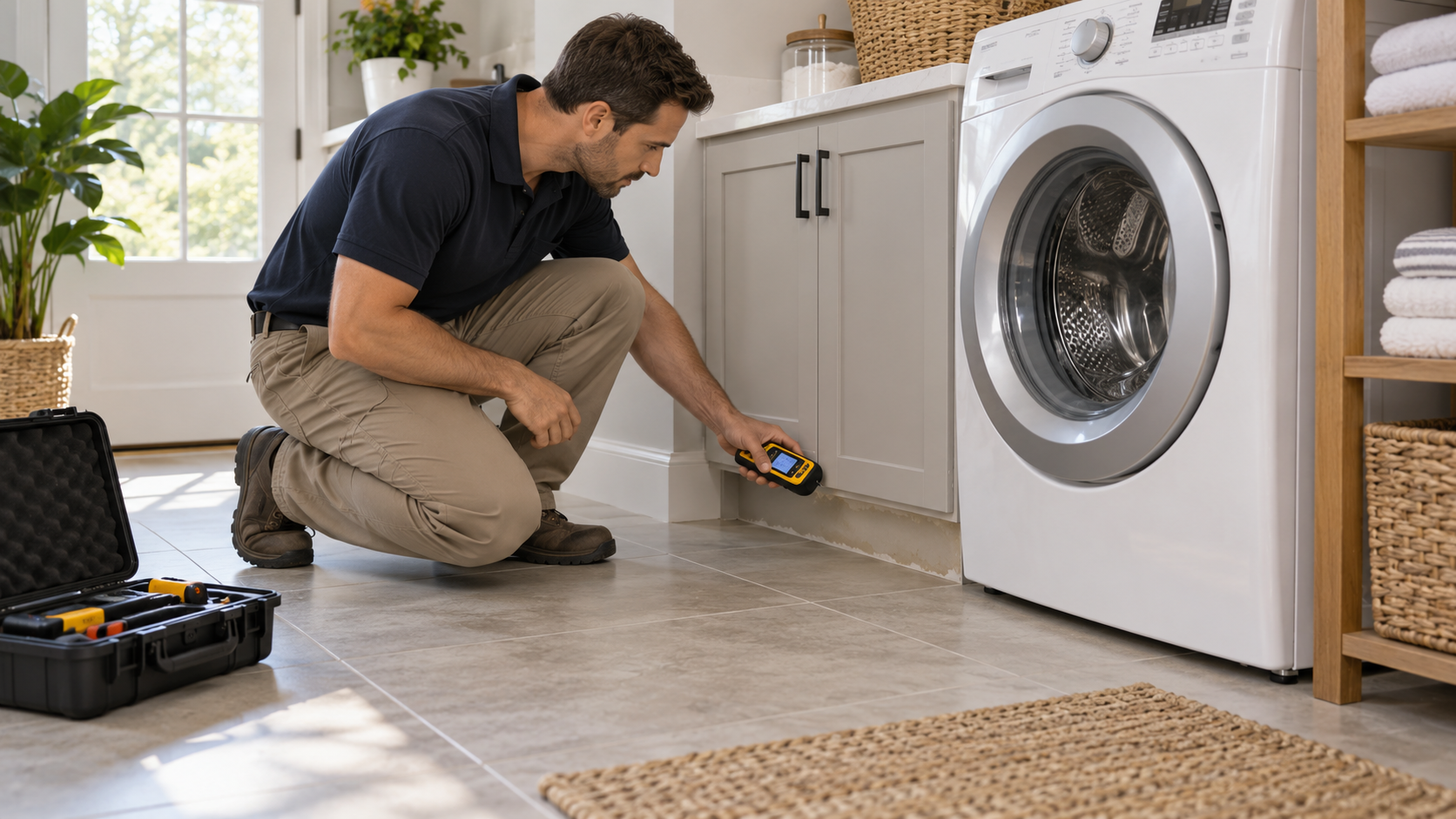
Every day that drying equipment is running, a technician returns to take moisture readings from all affected materials. Readings from walls, subfloor, framing, and any specialty materials like hardwood are logged.
Moisture mapping creates a baseline on day one — this is the reference point against which daily progress is measured. Thermal imaging can supplement meter readings for large wall sections or areas difficult to probe directly.
Equipment is adjusted based on readings. Air movers may be repositioned. Dehumidifier output is assessed. If moisture is not declining as expected, additional equipment may be added or problem areas identified.
Step 5 — Verify Dry Standard and Remove Equipment
Drying is complete when all materials reach what the industry calls "dry standard" — a moisture level consistent with unaffected materials in the same home. This is typically expressed as a specific reading range on the moisture meter for each material type.
Only at this point is equipment removed. Never remove equipment based on visual appearance or surface feel alone. Many materials — especially drywall, wood framing, and concrete — can appear and feel dry while still holding moisture above acceptable levels.
Once dry standard is confirmed, restoration (repairs and rebuild) can begin on a fully stable structure.
Special Situations: Hardwood Floors, Slab, and Attic
Hardwood floors: Drying hardwood requires both air movers at the surface and drying mats directly on the wood. Hardwood is slow to release moisture and prone to continued movement (cupping, warping) until fully equalized. Daily readings guide the process.
Slab-on-grade construction: Concrete slabs hold moisture significantly longer than wood framing. When water has penetrated a slab — common with Mesa's slab leaks — drying times extend. Specialized equipment and extended monitoring may be required.
Attic space: After a roof leak, attic drying requires air movers positioned to move air through the attic assembly, and possibly removal of saturated insulation before drying begins. Thermal imaging is especially useful in attic spaces to identify wet insulation from below.
Why This Matters in Mesa, AZ
Mesa's climate is both a help and a hindrance to drying. The outdoor air is dry — often very dry — which helps dehumidifiers work efficiently. But the indoor wall cavities and subfloors trap moisture in a microclimate that Mesa's outdoor conditions don't reach without the active airflow created by professional equipment.
Slab-on-grade construction creates extended drying challenges for any water event that reaches the concrete layer. Concrete dries from the surface down and can hold moisture for extended periods.
Monsoon events saturate materials quickly. A roof leak during a monsoon storm can introduce large amounts of water in a short period. Getting professional drying equipment in place within 24 hours gives the best chance of saving materials and preventing mold.
What To Do Next
If you've experienced water damage and drying hasn't started yet, call Mesa Water Damage Restoration at (623) 323-8489 immediately. We assess, extract, and set up professional drying equipment within 25 minutes of arrival.
Understand what can be saved through drying vs. what must be replaced: Can Water Damage Be Repaired Without Replacement in Mesa, AZ?
Understand why speed matters: How Fast Does Water Damage Spread in Mesa, AZ Homes?
When To Call a Professional
Call for professional drying immediately — not after attempting household fans for a few days. Every day of improper drying is a day of continued moisture in walls and floors. Professional drying started on day one is the difference between a 3–5 day job and a multi-week remediation project.
If someone tells you to "wait and see if it dries out," get a second opinion from a certified professional. In Mesa's climate, surface moisture may disappear fast — but structural moisture does not.
FAQ
How long does it take to dry out a house after water damage in Mesa, AZ?
Under professional drying conditions with properly scaled equipment, most residential water damage takes 3–5 days to reach dry standard. Larger events, concrete slab involvement, or attic drying may take longer. Equipment is monitored daily and removed only when moisture readings confirm all materials are fully dry.
Can I use my own dehumidifier to dry out water damage?
Consumer dehumidifiers can remove some moisture from the air in a room, but they are not designed or powerful enough for structural drying. They can't dry wall cavities, subfloors, or insulation. For anything beyond a very minor surface spill, professional equipment is necessary to prevent mold and material damage.
Should I open windows while my house is drying out in Mesa, AZ?
In Mesa's dry climate, opening windows can help ventilate surface moisture — but it also introduces outdoor air that can vary in humidity, especially during monsoon season when outdoor relative humidity rises. Professional drying equipment creates a controlled environment optimized for structural drying. Technicians will advise on ventilation based on the specific conditions.
How do I know when my home is fully dry after water damage?
Calibrated moisture meters and a defined dry standard for each material type are the only reliable indicators. Visual inspection and touch are not adequate — materials can look and feel dry while still holding moisture above acceptable levels. Your restoration technician provides a daily log of readings and confirms in writing when dry standard is reached.
Can drying equipment damage my home?
Professional drying equipment used correctly does not damage homes. However, drying too aggressively (extremely low humidity in a dry climate) can cause wood to dry too fast and crack or split — another reason professional monitoring is essential. Certified technicians adjust conditions daily based on readings.
What happens to my belongings during the drying process?
Furniture and belongings in the drying zone should be removed if possible to allow air movers to work without obstruction. Items that can be saved — furniture, rugs — may be moved to a dry area or treated separately. We advise on what to move and what to document for insurance before anything is relocated.
Is drying the same as remediation?
No. Drying is the physical process of removing moisture from structural materials. Remediation is the process of removing and treating mold-contaminated materials. If mold has already established, remediation must happen before or alongside drying. See How Long Before Mold Grows After Water Damage in Mesa, AZ? for the mold timeline.
Call Mesa Water Damage Restoration Today
Your home needs professional drying — not household fans. Mesa Water Damage Restoration brings industrial equipment on-site within 25 minutes. IICRC-certified technicians. Direct insurance billing. 24/7 availability. Call (623) 323-8489 now.
Easy steps to create a color palette
Lorem ipsum dolor sit amet, consectetur adipiscing elit lobortis arcu enim urna adipiscing praesent velit viverra sit semper lorem eu cursus vel hendrerit elementum morbi curabitur etiam nibh justo, lorem aliquet donec sed sit mi dignissim at ante massa mattis.
- Neque sodales ut etiam sit amet nisl purus non tellus orci ac auctor
- Adipiscing elit ut aliquam purus sit amet viverra suspendisse potent
- Mauris commodo quis imperdiet massa tincidunt nunc pulvinar
- Excepteur sint occaecat cupidatat non proident sunt in culpa qui officia
What is a color palette?
Vitae congue eu consequat ac felis placerat vestibulum lectus mauris ultrices cursus sit amet dictum sit amet justo donec enim diam porttitor lacus luctus accumsan tortor posuere praesent tristique magna sit amet purus gravida quis blandit turpis.

Don’t overspend on growth marketing without good retention rates
At risus viverra adipiscing at in tellus integer feugiat nisl pretium fusce id velit ut tortor sagittis orci a scelerisque purus semper eget at lectus urna duis convallis porta nibh venenatis cras sed felis eget neque laoreet suspendisse interdum consectetur libero id faucibus nisl donec pretium vulputate sapien nec sagittis aliquam nunc lobortis mattis aliquam faucibus purus in.
- Neque sodales ut etiam sit amet nisl purus non tellus orci ac auctor
- Adipiscing elit ut aliquam purus sit amet viverra suspendisse potenti
- Mauris commodo quis imperdiet massa tincidunt nunc pulvinar
- Adipiscing elit ut aliquam purus sit amet viverra suspendisse potenti
What’s the ideal customer retention rate?
Nisi quis eleifend quam adipiscing vitae aliquet bibendum enim facilisis gravida neque euismod in pellentesque massa placerat volutpat lacus laoreet non curabitur gravida odio aenean sed adipiscing diam donec adipiscing tristique risus amet est placerat in egestas erat.
“Lorem ipsum dolor sit amet consectetur adipiscing elit, sed do eiusmod tempor incididunt ut labore et dolore magna aliqua enim ad minim veniam.”
Next steps to increase your customer retention
Eget lorem dolor sed viverra ipsum nunc aliquet bibendum felis donec et odio pellentesque diam volutpat commodo sed egestas aliquam sem fringilla ut morbi tincidunt augue interdum velit euismod eu tincidunt tortor aliquam nulla facilisi aenean sed adipiscing diam donec adipiscing ut lectus arcu bibendum at varius vel pharetra nibh venenatis cras sed felis eget.