
Direct Answer
Whether water damage in Mesa, AZ can be repaired without replacement depends on the material, how long it was wet, and the water source. Hardwood floors, drywall, and structural framing can often be saved with fast professional drying if caught early. Carpet padding, saturated insulation, and materials exposed to contaminated water almost always require replacement. A professional moisture assessment determines exactly what can stay and what must go.
Key Takeaways
- Time is the biggest factor — materials caught early are far more likely to be saveable
- Clean water vs. contaminated water dramatically changes what can be restored
- Hardwood floors can often be dried and restored if addressed within 24–48 hours
- Drywall can sometimes be dried from the inside without removal using specialized equipment
- Carpet padding, saturated insulation, and contaminated materials typically require replacement
- Professional moisture mapping confirms when materials are dry enough to keep
- Restoration without replacement saves money — but only when done with the right equipment
Table of Contents
- The Key Factors That Determine Save vs. Replace
- Materials That Can Often Be Saved
- Materials That Usually Require Replacement
- How Professional Drying Saves Materials
- Why This Happens in Mesa, AZ
- What To Do Next
- When To Call a Professional
- FAQ
The Key Factors That Determine Save vs. Replace
Three factors determine whether a material can be saved:
- Time — materials wet for less than 24–48 hours under clean water conditions have the best chance of being saved. The longer they stay wet, the more degradation occurs.
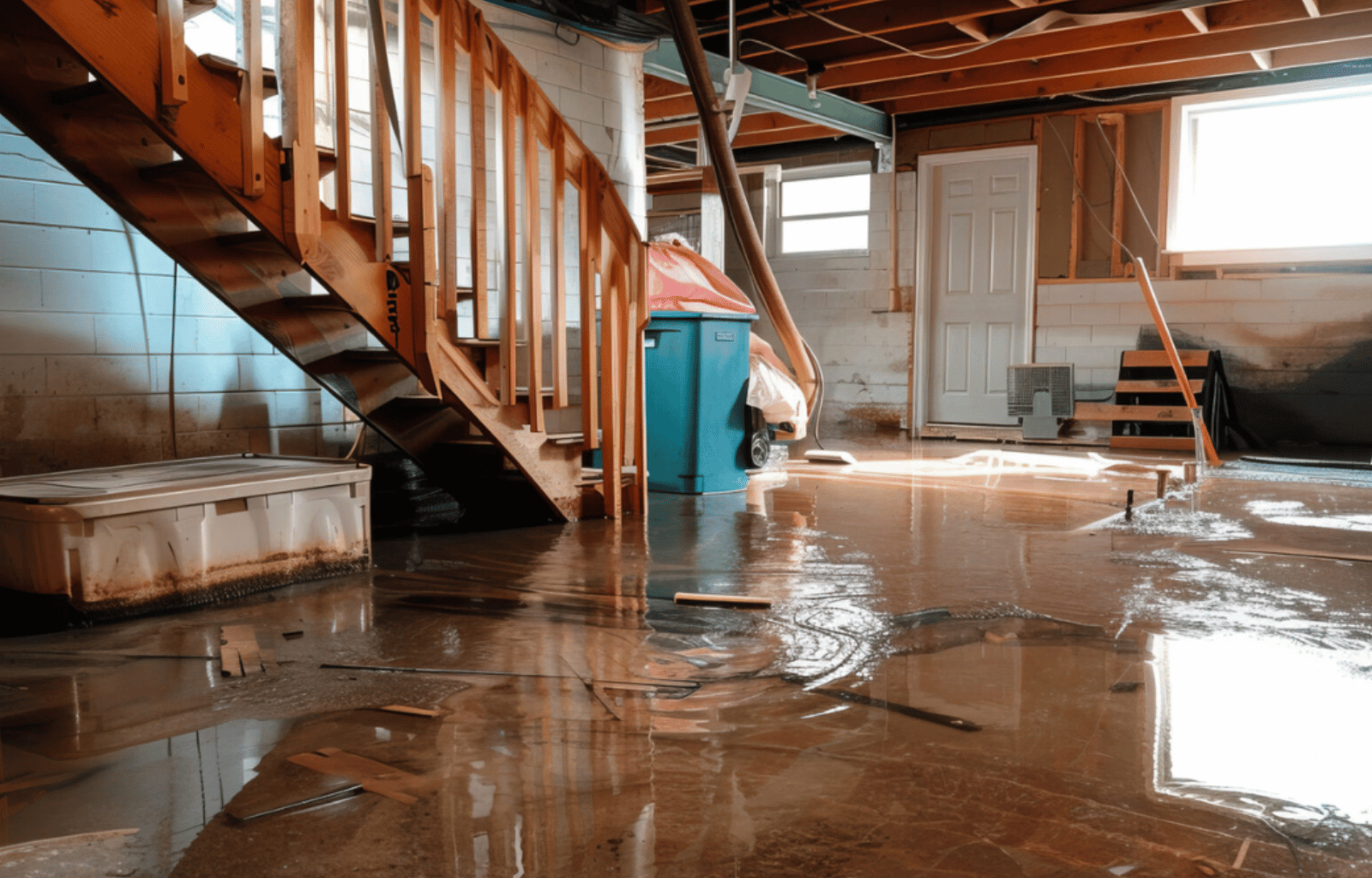
- Water source — clean water from a supply line or appliance gives materials the best chance. Gray water (washing machine drain, toilet overflow without solids) is borderline. Black water (sewage, stormwater, any water with contaminants) almost always requires removal and replacement of porous materials.
- Material type — some materials dry well; others trap moisture and cannot be reliably dried without removal.
Materials That Can Often Be Saved
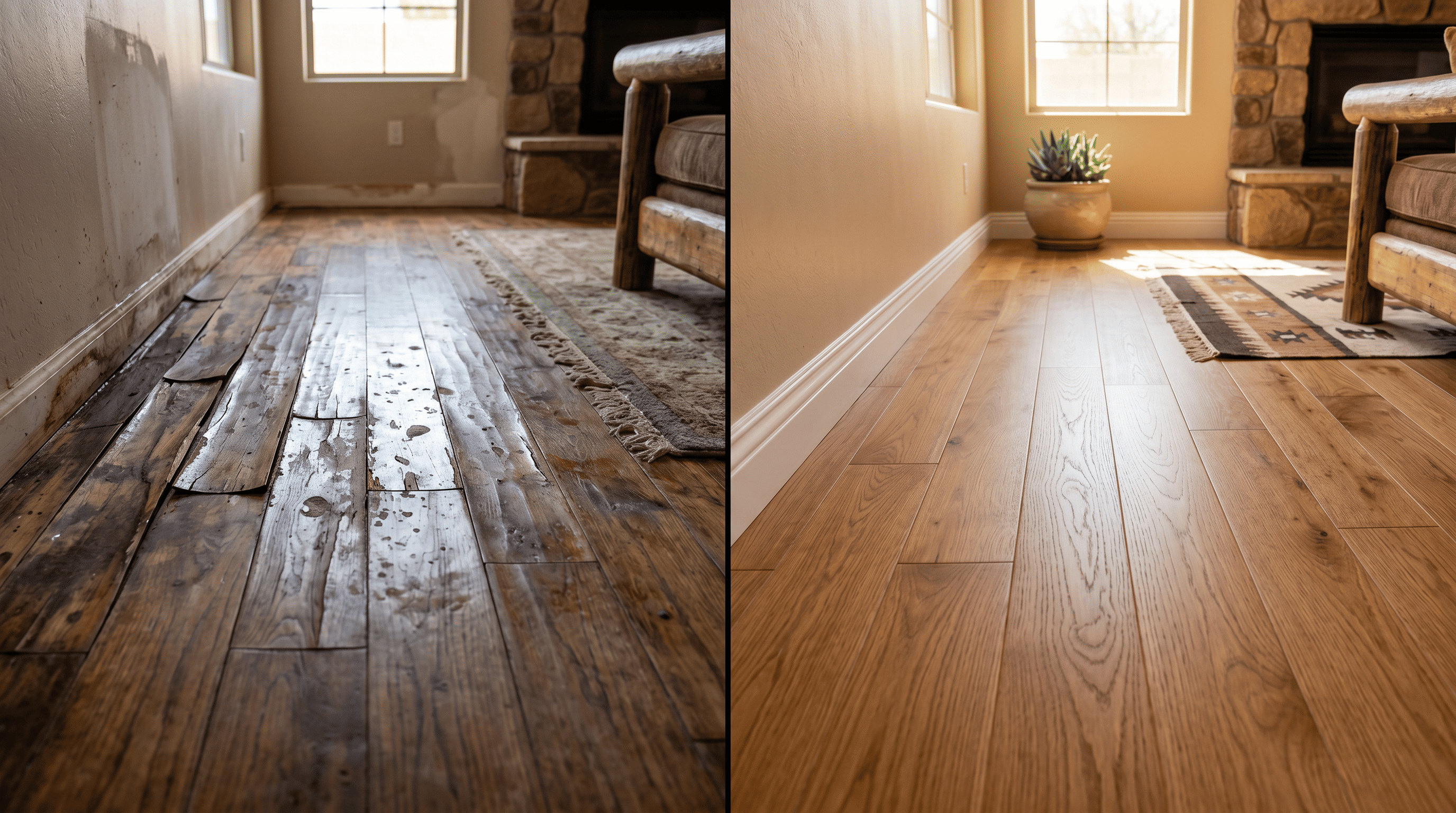
Hardwood floors: With professional drying mats, air movers, and dehumidifiers positioned properly, hardwood that was wet for under 48 hours under clean water conditions can frequently be dried and restored. Cupping and slight warping often resolves as moisture equalizes. Severe warping, buckling, or black water exposure typically requires replacement.
Structural framing (studs, joists): Solid wood framing is dense and takes time to absorb significant moisture. Drying within 24–72 hours of a water event usually prevents structural compromise. Framing that was wet for weeks — as often seen with slab leaks — may require replacement.
Drywall: Drywall that was wet only at the very bottom (within 6–12 inches) can sometimes be saved using flood cuts (removing a small strip) and drying the wall cavity from below. Drywall wet above the middle, or wet for more than 48 hours, typically requires full panel replacement. Moisture mapping determines the exact extent.
Tile flooring: Tile itself is impervious to water. The grout and adhesive beneath are the concern. If water infiltrated under the tile and saturated the mortar bed, the tile may need to be lifted, the subfloor dried, and the tile reset. Whether tiles can be saved depends on whether they can be removed cleanly.
Cabinets (solid wood): Solid wood cabinets can sometimes be dried. Particle board or MDF cabinets that absorbed water typically cannot be restored — they swell and delaminate.
Materials That Usually Require Replacement
Carpet padding: Carpet padding is foam or fiber — both absorb massive amounts of water and cannot be reliably dried in place. Even if the carpet surface dries, the padding underneath stays saturated and supports mold. In most cases, padding is removed and replaced while carpet is evaluated separately.
Saturated insulation: Fiberglass batt insulation absorbs water and loses its R-value when wet. It cannot be dried in place — it must be removed. Spray foam insulation is more water-resistant and may sometimes be preserved if the surrounding structure can be dried.
Water-damaged drywall (above mid-panel): Once drywall has absorbed significant moisture, the gypsum core breaks down, the paper face peels, and the material loses structural integrity. It typically cannot be saved and must be replaced.
Black water-contaminated materials: Any porous material — drywall, carpet, insulation, wood — that was exposed to sewage, stormwater, or contaminated water requires removal regardless of drying time. This is a health and safety requirement, not just a restoration best practice.
How Professional Drying Saves Materials
The difference between saving and replacing often comes down to equipment. Professional dehumidification and drying uses industrial air movers, low-grain refrigerant dehumidifiers, and drying mats designed specifically for hardwood floors. These systems create controlled airflow and draw moisture out of materials at a rate household fans cannot achieve.
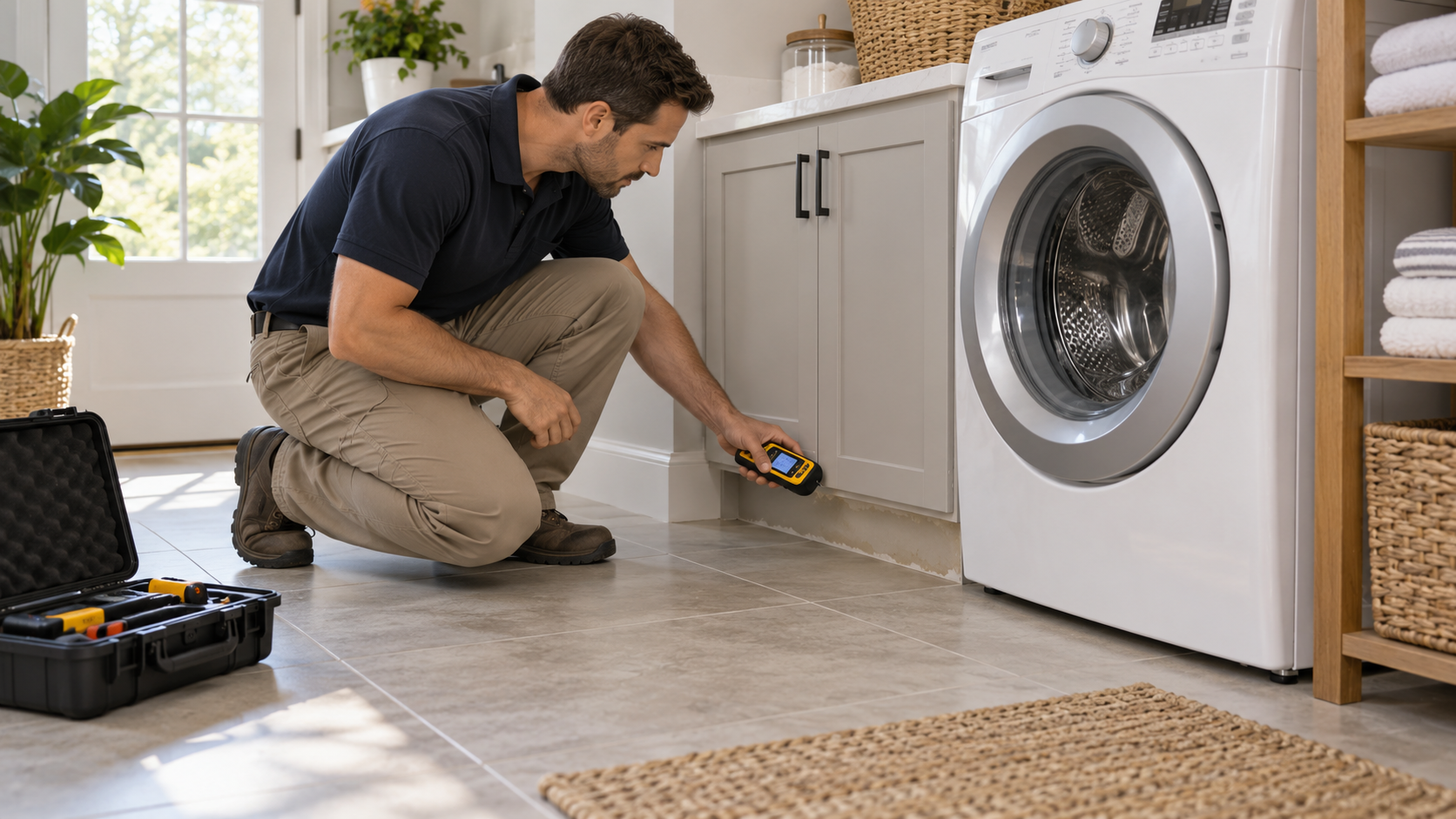
Moisture mapping with calibrated meters and thermal imaging identifies exactly where moisture is — and confirms when it's gone. Without this verification, it's impossible to know when materials are truly dry.
Water damage restoration then handles any rebuild work needed for materials that couldn't be saved.
Why This Happens in Mesa, AZ
Mesa's tile-dominant flooring creates specific challenges for the save-vs-replace decision. Grout lines allow water to pass through quickly, saturating the mortar bed and potentially the subfloor below — neither of which is visible without probing.
Hard water from Mesa's water supply accelerates pipe deterioration, leading to more frequent supply line failures. Because many Mesa homes are on slab, pipe failures under the slab often go undetected for months, leading to chronic moisture that typically cannot be addressed without material removal.
Monsoon storm events present a different challenge: large volumes of water entering through roofs and windows in short time windows. Whether materials can be saved depends heavily on how quickly the source was identified and response began.
What To Do Next
Call Mesa Water Damage Restoration for a professional assessment. Our technicians will use moisture meters and thermal imaging to map exactly what is wet, how saturated each material is, and what the drying potential is for each affected area. You'll get a clear, honest breakdown of what can be saved and what needs to go.
For context on how quickly materials absorb moisture, see How Fast Does Water Damage Spread in Mesa, AZ Homes?.
For a complete picture of the drying process, see How Do You Dry Out a House After Water Damage in Mesa, AZ?.
When To Call a Professional
Call immediately after any water event. The professional assessment determines what can be saved — and fast assessment means more materials stay in the "saveable" column. Every hour of delay shifts more materials from "dry and save" to "remove and replace."
If you're doing a renovation and discovered old water damage — warped subfloor, stained framing, musty smell — call for an assessment before proceeding. Water damage remediation handles materials that may have mold from past events.
FAQ
Can wet drywall dry out on its own in Mesa, AZ?
It may appear to — the surface can dry quickly in Mesa's low-humidity air. But the gypsum core and paper backing hold moisture far longer than the surface suggests. Wet drywall that seems dry to the touch can have elevated moisture readings that will support mold growth. Only professional moisture meters confirm true dryness.
Can I save my hardwood floors after a water leak in Mesa?
Often yes, if addressed within 24–48 hours with clean water. Professional drying mats and air movers have a strong track record of restoring hardwood without replacement. Floors that have been wet longer, or that show severe buckling or cupping, may require refinishing or replacement. A moisture assessment tells you which category your floors fall into.
Does professional drying damage hardwood floors?
No — when done correctly with appropriate equipment and moisture monitoring, professional drying protects hardwood floors. The alternative — leaving them wet or using inadequate equipment — causes far more warping and damage.
What about laminate flooring — can it be saved?
Laminate flooring is typically not salvageable after significant water exposure. The core of laminate planks (usually HDF or MDF) absorbs water rapidly and swells. Even if the surface looks fine, the core is compromised. Laminate that has lifted, buckled, or shows visible swelling at seams should be replaced.
What if only part of a room's drywall was wet?
Partial drywall replacement is common. A flood cut removes a horizontal strip (typically 12–16 inches) at the base of the wall, allows the wall cavity to be dried, and the cut section is replaced. This avoids removing and replacing full drywall sheets when only the bottom portion is affected.
Can professional drying save a wet subfloor?
Plywood subfloor caught within 24–48 hours has a reasonable chance of drying successfully, especially under tile. OSB subfloor is more susceptible to delamination when wet and is less likely to be fully restored. Moisture mapping determines the moisture content and condition of the subfloor to guide the decision.
Call Mesa Water Damage Restoration Today
Water damage in Mesa, AZ? The sooner we start drying, the more you save. Mesa Water Damage Restoration arrives in 25 minutes with professional equipment to save as much of your home as possible. Call (623) 323-8489 now — available 24/7.
Easy steps to create a color palette
Lorem ipsum dolor sit amet, consectetur adipiscing elit lobortis arcu enim urna adipiscing praesent velit viverra sit semper lorem eu cursus vel hendrerit elementum morbi curabitur etiam nibh justo, lorem aliquet donec sed sit mi dignissim at ante massa mattis.
- Neque sodales ut etiam sit amet nisl purus non tellus orci ac auctor
- Adipiscing elit ut aliquam purus sit amet viverra suspendisse potent
- Mauris commodo quis imperdiet massa tincidunt nunc pulvinar
- Excepteur sint occaecat cupidatat non proident sunt in culpa qui officia
What is a color palette?
Vitae congue eu consequat ac felis placerat vestibulum lectus mauris ultrices cursus sit amet dictum sit amet justo donec enim diam porttitor lacus luctus accumsan tortor posuere praesent tristique magna sit amet purus gravida quis blandit turpis.

Don’t overspend on growth marketing without good retention rates
At risus viverra adipiscing at in tellus integer feugiat nisl pretium fusce id velit ut tortor sagittis orci a scelerisque purus semper eget at lectus urna duis convallis porta nibh venenatis cras sed felis eget neque laoreet suspendisse interdum consectetur libero id faucibus nisl donec pretium vulputate sapien nec sagittis aliquam nunc lobortis mattis aliquam faucibus purus in.
- Neque sodales ut etiam sit amet nisl purus non tellus orci ac auctor
- Adipiscing elit ut aliquam purus sit amet viverra suspendisse potenti
- Mauris commodo quis imperdiet massa tincidunt nunc pulvinar
- Adipiscing elit ut aliquam purus sit amet viverra suspendisse potenti
What’s the ideal customer retention rate?
Nisi quis eleifend quam adipiscing vitae aliquet bibendum enim facilisis gravida neque euismod in pellentesque massa placerat volutpat lacus laoreet non curabitur gravida odio aenean sed adipiscing diam donec adipiscing tristique risus amet est placerat in egestas erat.
“Lorem ipsum dolor sit amet consectetur adipiscing elit, sed do eiusmod tempor incididunt ut labore et dolore magna aliqua enim ad minim veniam.”
Next steps to increase your customer retention
Eget lorem dolor sed viverra ipsum nunc aliquet bibendum felis donec et odio pellentesque diam volutpat commodo sed egestas aliquam sem fringilla ut morbi tincidunt augue interdum velit euismod eu tincidunt tortor aliquam nulla facilisi aenean sed adipiscing diam donec adipiscing ut lectus arcu bibendum at varius vel pharetra nibh venenatis cras sed felis eget.