
A puddle beside a washing machine or dishwasher can look like a small housekeeping problem. Sometimes it is. Other times the visible water is only the part that escaped from beneath an appliance, cabinet, or finished floor. The appliance may stop running while its supply connection continues leaking, or a slow connection leak may have wet nearby materials before anyone noticed.
The practical response is to control the plumbing problem safely and then assess what the water reached. This guide focuses on appliance-related emergencies: how to describe the problem, when to bring in the right trades, why concealed moisture matters, and what to check before putting a kitchen or laundry room back into normal use.
Understand which part of the system needs attention
A water-using appliance sits between several responsibilities. There may be a supply pipe and isolation valve, a flexible connection, a drain connection, and internal appliance components. A puddle does not identify which part failed. An appliance technician and a plumber may have different roles, while a restoration professional assesses the resulting damage to the room.
When you call for help, describe the observations rather than assigning a cause. Say whether the appliance was running, whether water continues appearing after it stops, and whether a visible connection is dripping. Mention any recent installation or repair. These details help the service provider decide whether their scope matches the problem and what additional assessment may be needed.
Do not restart the appliance repeatedly to prove that it leaks. That can add more water to the loss. Keep the unit out of service until the responsible professional explains how it should be tested. If a rental property is involved, notify the property manager and follow the agreed emergency procedure so repair authorization and access do not become separate delays.
Make the room safe before moving the machine
Water, electrical equipment, and heavy appliances are a poor combination for improvised troubleshooting. Keep children and pets away from the affected room. Do not step into standing water to unplug a machine, reach a breaker panel, or drag an appliance across the floor. Electrical isolation may need qualified help, particularly when water has reached wiring or electrical equipment.
If a known water isolation valve is reachable from a safe, dry location, closing it may limit further release. Do not force a stuck valve, disconnect hoses under pressure, or tip a machine to find the leak. A heavy appliance can damage connections or flooring when moved without preparation. Leave source diagnosis and safe access to a suitable professional.
A bulging ceiling in the room below is another reason to stay clear. Water may have travelled beyond the laundry or kitchen even when the puddle looks limited. Do not puncture or open a ceiling yourself to release it. Report the condition promptly and let the responding team determine a safe approach to assessment and any necessary access.
Decide when after-hours plumbing is necessary
An uncontrolled supply leak, repeated water release, or plumbing connection that cannot be isolated may require urgent plumbing service. A stable appliance fault with no continuing leak may have a different priority. Availability alone is not the decision; the current risk to the property and the ability to control the source matter.
Before an emergency, it helps to understand the information a 24/7 emergency plumber provides about after-hours response. Use that service model when building your own contact plan, and confirm each company's actual service area and capabilities before booking. The right contact is the one qualified and available to handle the specific property and failure.
During the call, ask whether the provider can address supply connections, valves, or drains and whether appliance repair falls outside their scope. Give access details and describe any electrical or contamination concerns. Request a clear explanation of any temporary measure. A stopped leak is useful, but the owner needs to know what remains before normal operation resumes.
Trace the moisture around cabinets and flooring
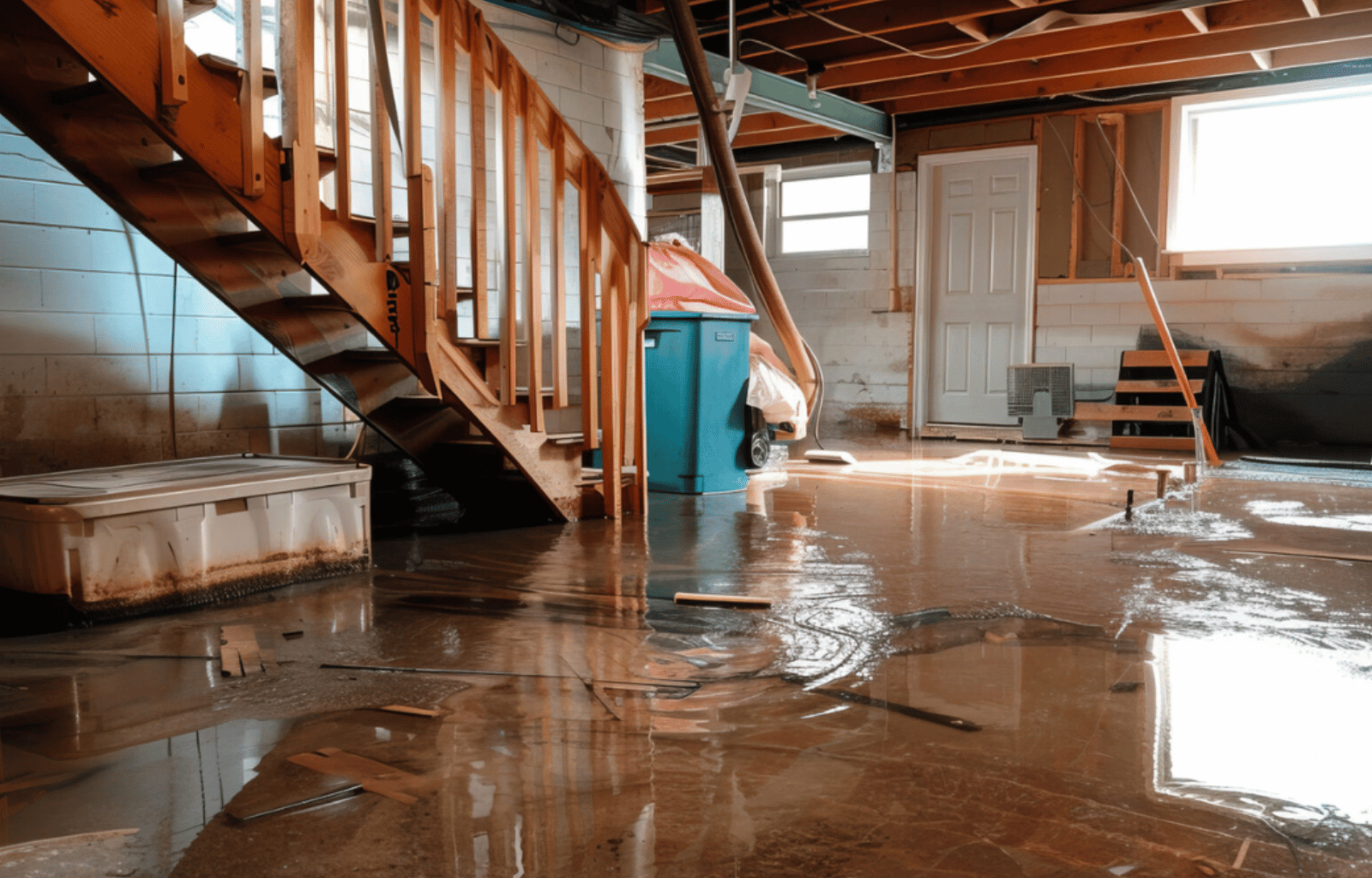
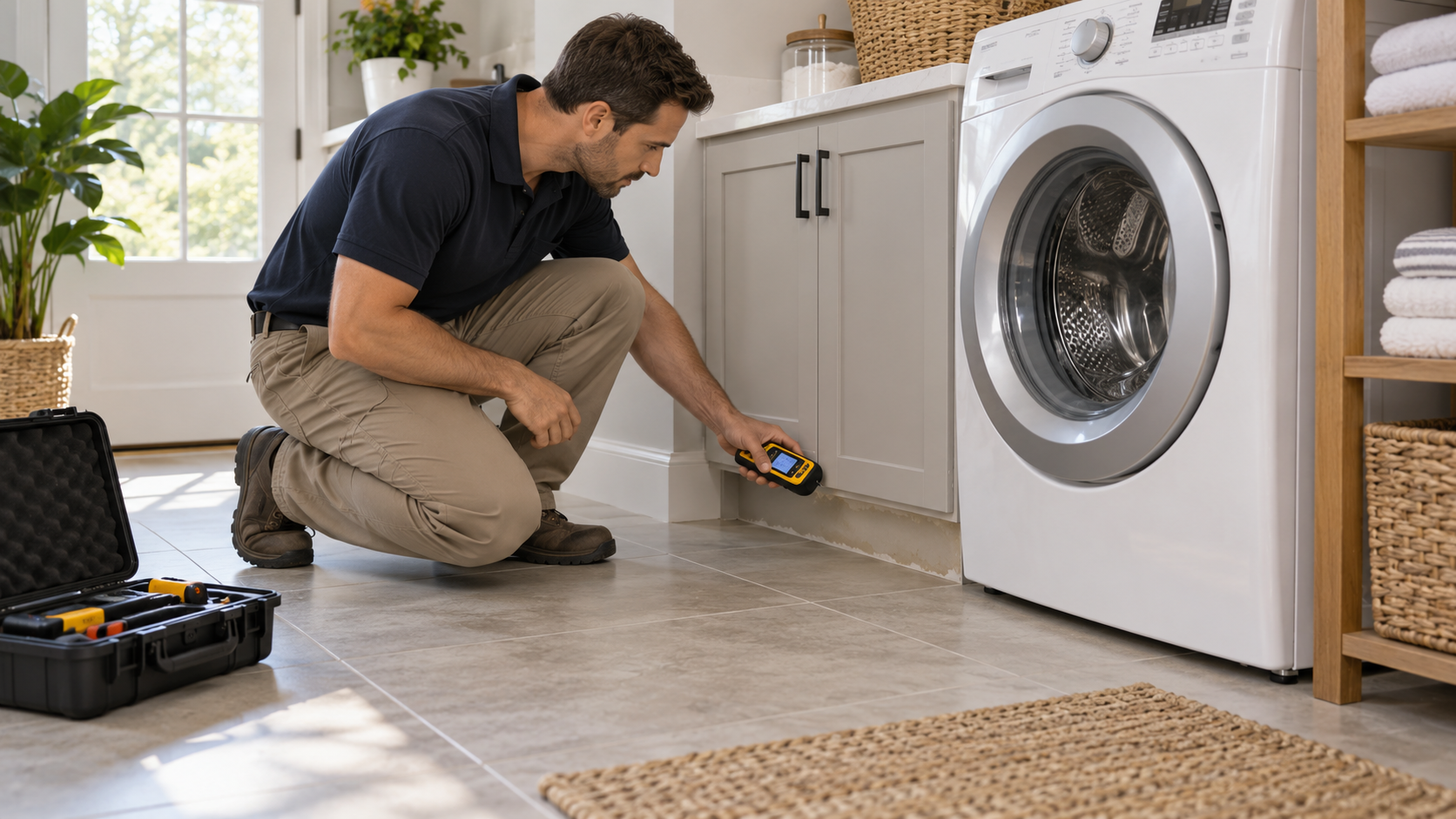
Kitchens and laundry rooms contain plenty of places where water can disappear from view. Cabinet toe kicks hide the space below the carcass. Flooring joints and penetrations can allow moisture into lower layers. Adjacent closets, walls, and rooms below may be affected. The visible puddle is a starting point for inspection, not a complete damage map.
Tell the restoration team about surrounding materials, including built-in cabinets, laminate or wood flooring, baseboards, and nearby walls. Note any swelling, softened edges, unusual odour, or new staining. Do not treat the absence of a visible stain as proof that everything below the finish is dry. The assessment should follow the possible water path through the actual room layout.
Ask what can be inspected without removal and where access may be required. Removal decisions should consider the condition of the material, contamination, and whether it can be dried effectively. A cabinet finish that looks intact may conceal an affected panel, but that does not mean every cabinet needs replacement. A specific inspection gives the project a defensible scope.
Use a drying plan tailored to the materials
Drying a room is more than placing a household fan next to the appliance. A restoration plan may involve water extraction, controlled air movement, dehumidification, access to concealed spaces, and monitoring. The right approach depends on the source, affected materials, and conditions. It should be explained before equipment becomes an obstacle in a busy household room.
Ask how moisture progress will be measured and what comparison conditions are being used. Keep the measurement locations consistent enough for the team to track changes. A reading should be understood in relation to the material and instrument, rather than presented as a universal pass or fail number. Ask what evidence will indicate that the affected assembly is ready for repair.
If drying equipment is in the room, discuss access and practical restrictions. Do not change settings or move equipment without checking with the team. If the kitchen is partially usable, clarify which appliances and areas remain out of service. A clear plan lets occupants adapt without accidentally interfering with drying or reconnecting a system that still needs repair.
Handle contamination and mold concerns cautiously
Water from an appliance problem is not always equivalent to clean supply water. A drain issue, sewage backup, or contact with contaminated material changes the response. If the source or condition is uncertain, avoid direct contact and keep belongings from spreading the water into other rooms. Ask the professional to explain the precautions appropriate to the loss.
The EPA recommends fixing plumbing leaks and drying materials completely, and calls for experienced professional help when sewage or other contaminated water is involved. These points support prompt assessment. They do not replace a property-specific plan, and a surface treatment does not establish that moisture hidden within cabinets or wall cavities has been addressed.
If mold is visible or suspected, tell the restoration provider before cleanup begins. Do not paint over affected surfaces or use fragranced products to disguise an odour. The CDC advises that people with certain respiratory conditions or immune suppression should not participate in mold cleanup. Consider household needs when arranging access, temporary room restrictions, and any specialist assessment.
Keep a record that separates repair from restoration
Photograph the room and visible water if doing so is safe. Capture wider views as well as the appliance area, cabinet bases, adjoining floor, and any room below. Record the discovery time, whether the machine was running, and when water isolation occurred. Keep observations distinct from guesses about how long the leak existed.
Ask for the plumbing or appliance repair record to identify what failed, what was repaired, and what testing was performed. Ask the restoration documentation to identify the affected materials, assessment areas, equipment, and progress. Those records help the next trade understand the loss. They are also useful if a related symptom appears after the room has returned to use.
If you intend to make an insurance claim, contact the insurer and follow the policy's instructions. Do not assume appliance leaks are automatically covered or that every replacement choice will be approved. Keep receipts and discuss evidence requirements before damaged items are discarded. Urgent safety and mitigation decisions should be documented clearly rather than postponed only to produce perfect photographs.
Test the repair before closing the surrounding area
Once source repair is complete, the responsible professional should explain how the system will be tested. That may differ for a supply connection, drain connection, or internal appliance component. Ask who will reconnect or return the appliance to service and whether follow-up inspection is required. Avoid letting responsibility fall between the plumber, appliance technician, and cabinet installer.
Do not reinstall toe kicks, close wall access, or replace floor finishes until the relevant assessment and drying decisions are complete. Confirm that concealed areas needed for testing remain accessible. A cosmetic repair made too early can make later investigation harder and leave the owner uncertain about what was inspected.
When replacement is necessary, separate damage repairs from optional upgrades. A change in appliance dimensions, cabinetry layout, or flooring may affect the sequence and required connections. Make those choices with the contractor before material orders are finalized. The goal is a working room whose plumbing, appliance access, and finishes have been considered together.
Prevent the next incident with accessible information
After recovery, review the appliance connections and maintenance requirements with the appropriate professional. Follow manufacturer guidance instead of relying on an arbitrary replacement schedule found online. Ask whether the isolation valve is functional and accessible, whether drain connections are appropriate, and whether a leak sensor would make sense in the particular room.
Keep emergency contacts and basic isolation information somewhere the household or property manager can find after hours. Make sure an appliance does not block the only route to a valve that may be needed urgently. If you leave the property unoccupied for extended periods, discuss suitable water monitoring and isolation arrangements with a qualified professional rather than improvising a solution.
For managed rentals, record who may authorize a repair and how tenants should report a leak. A photograph of a safe, labelled isolation location can be useful, but the instructions should also explain when not to approach it. The best plan helps people make a safe call quickly instead of encouraging them to carry out unfamiliar repairs.
A dry-looking floor is not the end of the job
Appliance leak recovery works best when the source repair and the room assessment stay connected. Control the release safely, establish who owns each part of the repair, inspect the plausible moisture path, and use evidence to decide when the finishes can close again. That approach is more reliable than assuming the puddle represented the whole loss.
Mesa Water Damage Restoration offers appliance leak cleanup and dehumidification and drying. Discuss the source status, affected rooms, and concealed-material concerns with the team when arranging an assessment. A clear handoff from plumbing or appliance repair to restoration helps turn a disrupted room into a documented recovery.
Easy steps to create a color palette
Lorem ipsum dolor sit amet, consectetur adipiscing elit lobortis arcu enim urna adipiscing praesent velit viverra sit semper lorem eu cursus vel hendrerit elementum morbi curabitur etiam nibh justo, lorem aliquet donec sed sit mi dignissim at ante massa mattis.
- Neque sodales ut etiam sit amet nisl purus non tellus orci ac auctor
- Adipiscing elit ut aliquam purus sit amet viverra suspendisse potent
- Mauris commodo quis imperdiet massa tincidunt nunc pulvinar
- Excepteur sint occaecat cupidatat non proident sunt in culpa qui officia
What is a color palette?
Vitae congue eu consequat ac felis placerat vestibulum lectus mauris ultrices cursus sit amet dictum sit amet justo donec enim diam porttitor lacus luctus accumsan tortor posuere praesent tristique magna sit amet purus gravida quis blandit turpis.

Don’t overspend on growth marketing without good retention rates
At risus viverra adipiscing at in tellus integer feugiat nisl pretium fusce id velit ut tortor sagittis orci a scelerisque purus semper eget at lectus urna duis convallis porta nibh venenatis cras sed felis eget neque laoreet suspendisse interdum consectetur libero id faucibus nisl donec pretium vulputate sapien nec sagittis aliquam nunc lobortis mattis aliquam faucibus purus in.
- Neque sodales ut etiam sit amet nisl purus non tellus orci ac auctor
- Adipiscing elit ut aliquam purus sit amet viverra suspendisse potenti
- Mauris commodo quis imperdiet massa tincidunt nunc pulvinar
- Adipiscing elit ut aliquam purus sit amet viverra suspendisse potenti
What’s the ideal customer retention rate?
Nisi quis eleifend quam adipiscing vitae aliquet bibendum enim facilisis gravida neque euismod in pellentesque massa placerat volutpat lacus laoreet non curabitur gravida odio aenean sed adipiscing diam donec adipiscing tristique risus amet est placerat in egestas erat.
“Lorem ipsum dolor sit amet consectetur adipiscing elit, sed do eiusmod tempor incididunt ut labore et dolore magna aliqua enim ad minim veniam.”
Next steps to increase your customer retention
Eget lorem dolor sed viverra ipsum nunc aliquet bibendum felis donec et odio pellentesque diam volutpat commodo sed egestas aliquam sem fringilla ut morbi tincidunt augue interdum velit euismod eu tincidunt tortor aliquam nulla facilisi aenean sed adipiscing diam donec adipiscing ut lectus arcu bibendum at varius vel pharetra nibh venenatis cras sed felis eget.