

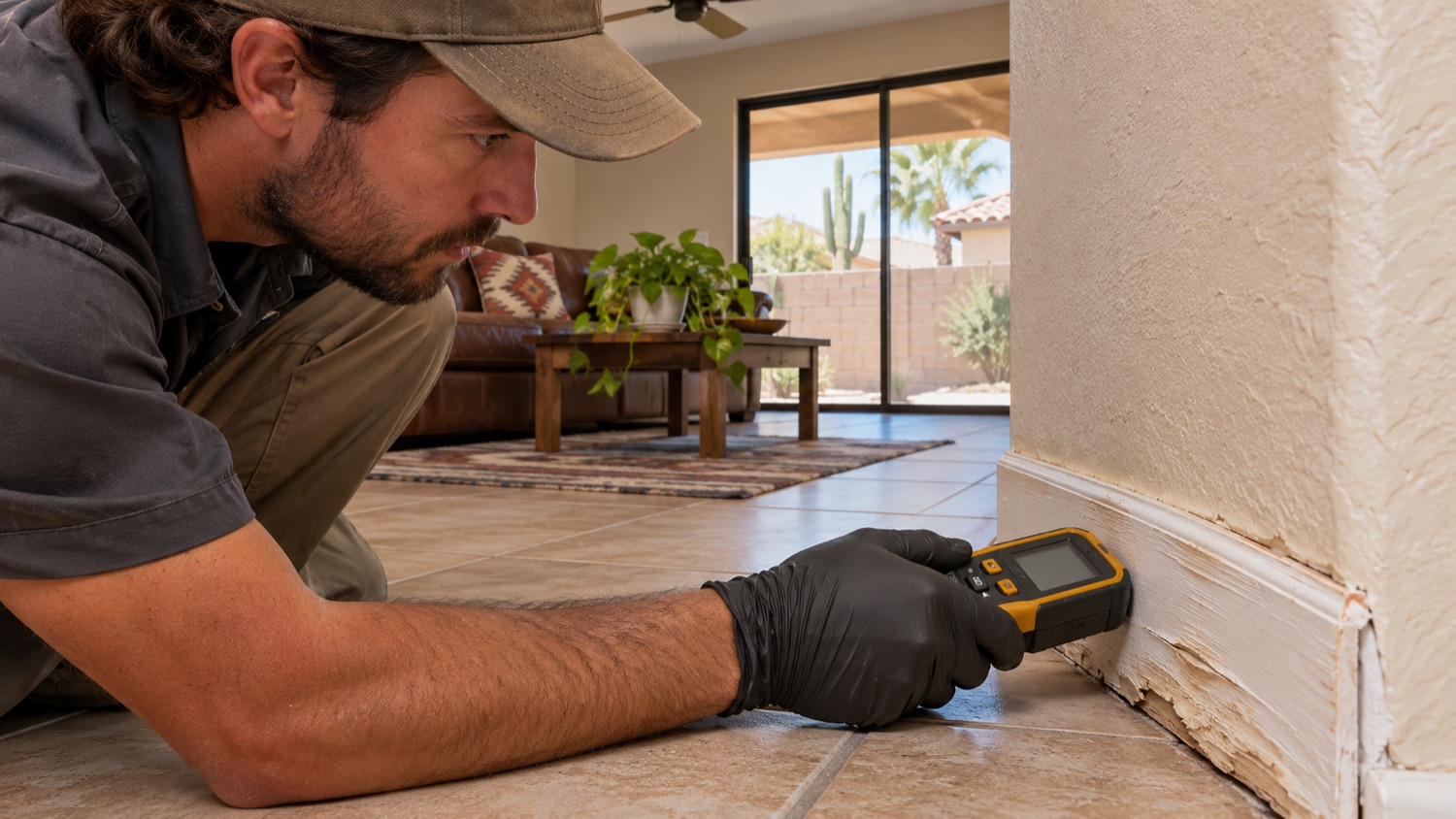
When water recedes from a tiled room, the floor can seem to recover faster than the rest of the house. Mop away the puddle and the tile looks much as it did before. A few days later, a baseboard swells, a grout line stays dark, or the room still smells damp even with the windows open. The tile surface tells you what is happening on top of the floor. A restoration assessment needs to account for the materials at its edges and beneath it as well.
Homes have a mix of tile, flooring transitions and floor assemblies. A decision to keep tile depends on the water source, the condition of the installation, and whether affected materials can be reached, cleaned and verified dry. Use this guide to understand what a restoration technician and flooring installer should each be looking for.
Start with what the water touched
A split supply line can release relatively clean water at first. Once that water has crossed dirty surfaces, sat for a long period or mixed with another source, the restoration plan may change. Outdoor stormwater and sewage backups can carry contaminants through grout gaps or into perimeter joints. If water came from outdoors, tell the restoration team what it crossed and whether sediment or sewage was present. Keep people and pets out of the affected room until it is safe to enter. If water could have reached electrical equipment, let a qualified professional assess access.
The EPA guide to cleaning flooded homes explains why restoration involves cleaning surfaces, assessing what can be salvaged and completely drying the building. A flood restoration company can assess where the water traveled and recommend a cleanup and drying plan for the floor assembly.
Document what happened before the appearance changes. A photo of a line of silt across the middle of a room, a wet transition into the hallway or water standing against a baseboard helps to reconstruct the path. Keep a short timeline of the failure or storm and note who shut off the source, removed water or moved contents.
Work out what sits under the flooring
A tile floor can be bonded directly to a concrete slab, set over a membrane or installed on a different substrate. Older additions or raised sections of a house can use a different assembly from the original room. To find out which construction you have, look for installation records or photos from a remodel. A floor transition, supply opening or exposed edge may also give the installer a way to identify layers without opening up the middle of the room.
Knowing how the tile is installed changes what the crew looks for. Tile bonded to a sound slab may present different options from tile installed over an underlayment with wood beneath it. Moisture that reaches a wood subfloor can move beyond the area on the tile surface. An impermeable layer can also complicate access and slow drying of material underneath it. The shape of the visible puddle is only one clue.
A qualified flooring installer can inspect for movement, cracked grout and loss of bond. A hollow sound can have multiple causes, especially in an older installation. Point out changes you can date, such as grout opening after the flood or a tile that lifted while water was being removed. Fresh changes matter more than guessing what a sound alone means.
Inspect the edges, walls and adjoining rooms
Follow the perimeter of the room and consider the direction the water would have taken. Baseboards conceal the gap where flooring meets walls. Below a cabinet, the toe kick can block a view of the back edge and the cabinet base. A doorway threshold can hide the point where tile meets floating flooring or carpet. A pad beneath carpet can remain wet after the top seems to have dried.
Ask the technician to map moisture and note any areas that could not be inspected. For a tiled bathroom next to a carpeted closet, the record might show findings at the toilet wall, the doorway and the closet carpet edge, with the vanity base still pending. If one item is blocking access, it is useful to know whether the team can remove just the trim or needs a larger opening.
A discolored patch of grout is evidence worth recording, but one photograph will rarely establish the moisture condition beneath it. Likewise, an inspection tool may indicate a change that warrants follow-up without saying what caused it. Ask where the team took comparison readings and which surfaces they used. Readings are most meaningful when compared with similar materials and interpreted alongside the construction details.
Decide whether the floor can stay
Start with three practical questions. Can contaminated areas be reached and cleaned? Is the installation physically sound? Can the moisture condition be verified before the space is closed or a new material is put on top? Keeping the floor makes sense only when the answers support that plan. If areas below the tile cannot be cleaned or the tile has moved, removal may be needed to establish a sound surface for the next step.
Explain the importance of a continuous floor before anyone removes individual tiles. An identical tile might be unavailable, a faded grout color may be hard to match and a repair line could land in the middle of a prominent room. Those are valid reconstruction decisions. The immediate restoration scope still depends on where water went and what must be accessed.
When a flooring installer recommends replacing an entire room, ask why. Sometimes it is necessary to reach or repair a damaged substrate. Sometimes an isolated section is possible, but the original tile is unavailable or the project needs a transition at a doorway. These reasons have different costs and implications. Write down which one applies before you agree to a larger scope.
Before choosing between a repair and replacement, compare the proposals in the same terms. Ask whether they include disposal, access at the edges, drying of the underlying material, replacement of damaged trim and restoration of transitions. One quote may cover only taking up and resetting tile. Another might include the work to make the slab ready. Request a room sketch or a list of measurements so the difference is visible before comparison. If the decision depends on an area nobody can check without removing a piece, agree on the location and purpose of that opening and what the contractor will do with the findings.
Verify readiness before closing the job
If the tile remains, request documentation of what was cleaned, how damp areas were measured and what the final inspection found at the walls and transitions. A crew may move equipment as readings change. Ask for the end results and any surfaces that need follow-up, such as a cabinet base that will be removed separately.
If the tile was removed, share the drying record with the flooring installer before choosing a replacement. Some floor coverings and installation products require particular substrate moisture tests or surface preparation. Use the instructions for the selected system. A visually clean slab alone does not show whether it meets a product requirement. Avoid locking in install dates before the substrate and any repairs have been evaluated.
Record the replacement materials and keep a few matching tiles if there are extras. Save images of floor layers and low spots that were exposed. That information will help with a later appliance leak, drain backup or storm, especially if someone else takes over the property.
Prevent a second wetting from the same route
If the flood came through a patio entry, ask whether the outside grade or drainage system has been inspected in addition to the door. If it came from a supply line, make sure the repair is documented and the new line or valve can be accessed. In a laundry room or utility area, note which way water can travel when it escapes the appliance. Knowing the route makes it easier to decide where a sensor or equipment shutoff could help.
After a flood, a dry-looking tile floor is good news only when the rest of the assembly supports it. Match the response to the source, examine edges and hidden layers, and ask for the inspection record before signing off on repairs. That protects what can be saved and gives the flooring installer a clearer basis for what must be replaced.
Easy steps to create a color palette
Lorem ipsum dolor sit amet, consectetur adipiscing elit lobortis arcu enim urna adipiscing praesent velit viverra sit semper lorem eu cursus vel hendrerit elementum morbi curabitur etiam nibh justo, lorem aliquet donec sed sit mi dignissim at ante massa mattis.
- Neque sodales ut etiam sit amet nisl purus non tellus orci ac auctor
- Adipiscing elit ut aliquam purus sit amet viverra suspendisse potent
- Mauris commodo quis imperdiet massa tincidunt nunc pulvinar
- Excepteur sint occaecat cupidatat non proident sunt in culpa qui officia
What is a color palette?
Vitae congue eu consequat ac felis placerat vestibulum lectus mauris ultrices cursus sit amet dictum sit amet justo donec enim diam porttitor lacus luctus accumsan tortor posuere praesent tristique magna sit amet purus gravida quis blandit turpis.

Don’t overspend on growth marketing without good retention rates
At risus viverra adipiscing at in tellus integer feugiat nisl pretium fusce id velit ut tortor sagittis orci a scelerisque purus semper eget at lectus urna duis convallis porta nibh venenatis cras sed felis eget neque laoreet suspendisse interdum consectetur libero id faucibus nisl donec pretium vulputate sapien nec sagittis aliquam nunc lobortis mattis aliquam faucibus purus in.
- Neque sodales ut etiam sit amet nisl purus non tellus orci ac auctor
- Adipiscing elit ut aliquam purus sit amet viverra suspendisse potenti
- Mauris commodo quis imperdiet massa tincidunt nunc pulvinar
- Adipiscing elit ut aliquam purus sit amet viverra suspendisse potenti
What’s the ideal customer retention rate?
Nisi quis eleifend quam adipiscing vitae aliquet bibendum enim facilisis gravida neque euismod in pellentesque massa placerat volutpat lacus laoreet non curabitur gravida odio aenean sed adipiscing diam donec adipiscing tristique risus amet est placerat in egestas erat.
“Lorem ipsum dolor sit amet consectetur adipiscing elit, sed do eiusmod tempor incididunt ut labore et dolore magna aliqua enim ad minim veniam.”
Next steps to increase your customer retention
Eget lorem dolor sed viverra ipsum nunc aliquet bibendum felis donec et odio pellentesque diam volutpat commodo sed egestas aliquam sem fringilla ut morbi tincidunt augue interdum velit euismod eu tincidunt tortor aliquam nulla facilisi aenean sed adipiscing diam donec adipiscing ut lectus arcu bibendum at varius vel pharetra nibh venenatis cras sed felis eget.